Tuesday, July 31, 2012

The Ship of State is Leaking

...
Our leadership in Washington has gotten itself all worked up into a frenzy over leaks of classified information, particularly intelligence and national security related information, to otherwise perfectly respectable and pliable journalists and their publications.  Are our executive agencies, congressional leaders and lobbyists up in arms over the outrages, atrocities and even war crimes revealed in these leaks?  Good heavens no - they are furious that these American activities did not remain secret, concealed from the public they ostensibly serve, visible only to themselves by dint of their great power and wisdom.  Or something.

The tradition of the government leak goes well back in history, even predating its most famous practitioner, the anonymous-until-deceased "Deep Throat", but in the years since the Vietnam War the increasingly broad secrecy around government operations, in a kind of developing "classification culture" has driven a massive increase in the number and regularity of leaks.  Generally, they fall into two categories - ideological and political.  Political leaks are by far the most common - when one faction or party leaks classified information that advances their specific agenda, makes them look good or tarnishes their opposition.  These are really just another case of elected officials using journalists to advance political goals, but they at least also have the benefit of increasing transparency, however secondary or unintended that goal might be. Better, from a societal point of view, is the much more rare ideological leak, where a government employee is aware of something the government is keeping secret that truly offends the conscience.  In a long tradition from Ellsberg to Manning they work with journalists to expose the information, and usually pay a high price for doing so.

There is often some confusion between a leaker and a 'whisle blower', which is not terribly surprising because there can be some significant overlap, especially in those cases where the driving force is ideology or morality.  But in the main, it is not helpful to conflate the two.  A whistle blower may provide classified information to a journalist in order to draw attention to a particular act of wrongdoing, often criminal, being covered up by government leaders, but the whistle blower's goal is not exposure qua exposure, but rather to correct and/or punish behaviors and address grievances.  The more common leak has no agenda beyond exposure, and no expectation that anything other than political leverage might come of it.  However, under the foul GW Bush administration, and increasingly under Barack Obama, both leakers and whistle blowers are routinely prosecuted, punished and ostracized. even as the government nullifies their efforts to invoke change behind state secrets and national security claims - claims that, interestingly, cannot themselves be verified or adjudicated.

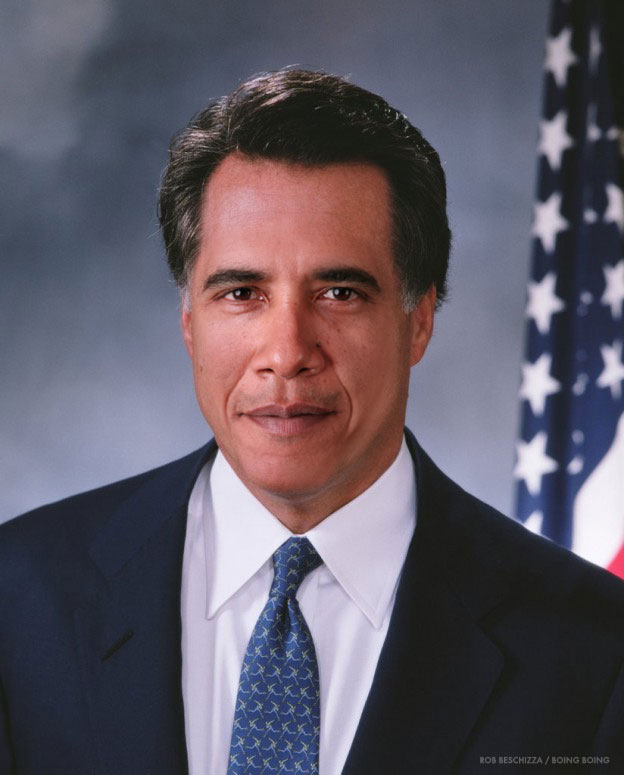
Romney accuses Obama of leaking classified information for political purposes.  People in congress stand up and rail in apparent anguish at these criminal acts.  In a classic window into the worldview of the political leadership, it is the leak that threatens national security, not the underlying facts and actions themselves.  There is no compunction around committing the war crimes, terrorist acts and routine violations of sovereignty, only about letting the people who elected them actually know about them.  So Congress hears the complaints from all around them, so it becomes clear that Something Must Be Done.  But this is a hard problem - it is Congress itself, between the elected representatives and their staffers, that relies most heavily on tactical leaks for political gain.  So they must be very careful in crafting any legislation to address this "problem" - it must appear to be functional without actually being effective.  Where to turn for such an advanced level of corruption and cynicism?  Why, Diane Feinstein of course.

Senator Feinstein's bill, approved by the Senate Intelligence Committee today, would make the so-called 'background brieifings' typically provided by intelligence agency analysts illegal.  Analysts could still speak on the record, but only the agency Director, Deputy Director or Public Affairs officers could  “provide background or off-the-record information regarding intelligence activities to the media.” There. That should solve the problem, right? Or maybe not. From the Washington Post:

Feinstein acknowledged that she knew of no evidence tying those leaks or others to background sessions, which generally deal broadly with analysts’ interpretations of developments overseas and avoid discussions of the operations of the CIA or other spy services.

There, you see? The answer is apparently draconian measures that actually make it harder for government to function while completely failing to address the problem of classified leaks.

Everyone knows what the problem is, and how to fix it.  The American government classifies far too much information, including banal everyday documents and communications that have no basis for secrecy.  As a result, no one takes the classification of documents particularly seriously, and having access to classified material only provides yet another source of political leverage to those who wish to make use of it.  If only truly critical intelligence and national security information was classified, people would have a much greater tendency to protect that data, and the government would find it much harder to conceal everything from criminal activity to stupid errors in judgement.  Which is ultimately why the culture of secrecy will only grow, and there will be a corresponding rise in leaks.


There is a very interesting paradox in all this.  The American corporate press has become, if not a lapdog at least a dog on a very short leash, more often acting as 'stenographers' in the words of Glenn Greenwald, happily writing "Shape of the Earth - Opinions Differ" stories and accepting without challenge the most blatant of lies.  And yet, when presented with a leak, even one as sensitive as the recent "Presidential Kill List" and "Stuxnet" stories, they still seem to have a vestigial attachment to the original principles of news reporting and, much to the chagrin of their corporate ownership, actually serve their most hallowed purpose and publish the 'scoop'.   For all the cries from government itself about the danger in leaking classified information, it is government itself that thrives on those leaks - and the leaks may be the only thing remaining that drives real journalism.
...

Sunday, July 29, 2012

Iran Sanctions - Playing the Game to Win

...
This cool graphic adds a sense of drama to the narrative
There is broad international consensus that Iran's nuclear research and development program is problematic, and that pressure should be brought to bear to change her behavior.  This consensus is so robust that these nations are willing to set aside Iran's rights and their own obligations under international law and treaties such as the NPT and make what are essentially unfounded and even illegal demands.  Of course, when the UN comes together to make demands, there is no other body that can adjudicate the fairness or legality of those demands, so they become the new legal reality.  To this point, the international community has been unwilling to use military power to enforce these demands, but has instead relied on economic sanctions to create an untenable atmosphere of misery and desperation that would require the Iranians to acquiesce to international demands.

And surprisingly, considering the rather uninspiring history of the use of economic sanctions, these appear to have worked.  Iran has indicated that they are broadly prepared to negotiate limits to their nuclear enrichment program in exchange for a reduction in the sanctions regime.  This would appear to be a clear cut victory for the world.  It's the way these things are supposed to work - bring economic pressure to bear to punish behaviors agreed to be unacceptable, then reduce that pressure to reward steps toward compliance with demands.  Any other approach would be irrational - to bring sanctions to bear to change behavior but then to offer no clear path towards getting those sanctions lifted would be pointless and cruel.  No sovereign nation would agree to a set of external demands under coercive pressure without a corresponding agreement to reduce that pressure - there would simply be no reason for them to do so when the outcome would be no change to their conditions.  To put it another way, a permanent and non-negotiable sanctions regime is not a method for changing behavior, but rather more an act of economic warfare intended to topple governments, and in spite of claims to the contrary should be seen in that light.

Despite the belligerent talk, no one short of some rather unpleasant pundits actually wants war with Iran.  Iran would perhaps like to develop a nuclear weapon as a deterrent - while there is no active weapons program in Iran now, the civilian research program undeniably shortens the path to a 'breakout' capability - but it must be recognized that Iran has a powerful deterrent available today: Geography.  The Strait of Hormuz is critical to providing about a quarter of the world's crude oil, and with production rates only slightly greater than consumption any disruption of this necessary shipping route will create shortages and drive the price to unprecedented heights, creating a global recession.  No matter the reassuring platitudes uttered by the US Navy, it is well known that Iran can use its proximity to the Straits to wreck the economies of the US, Europe and Asia anytime they choose.  This is without even considering the pent up forces that would be unleashed by a regional war - the festering Sunni vs. Shi'ite conflict in virtually every Gulf nation, the hatred for America and Israel, the plight of the Palestinians, Israeli and Pakistani nuclear weapons - you can be sure that nobody, not even the pathological Netanyahu really wants to find out how that all turns out.

So if starting a war isn't the goal, and the sanctions aren't being used to modify Iranian behavior despite the claims to that effect, what IS the agenda of the anti-Iran western governments?  Well, I can't think of  many outcomes from a one-way sanctions regime outside of regime change.  And I think we if we look at how the sanctions process is being managed, in an atmosphere of constant threats of unprovoked attacks and an absolute unwillingness to take "yes" for an answer, the only possible intention is the collapse of the Iranian Theocracy.  But short of open warfare, this certainly seems like the highest risk, lowest reward agenda that western governments could pursue.  The uncertainty about how the current regime would collapse, how much chaos, violence and disruption would result, and who would take over the Iranian leadership is nearly limitless.  It could be an even more hard-line Theocracy.  It could be a military dictatorship under the generals of the Republican Guard.  It might even be a more secular liberal democracy.  But no matter what government takes power, in light of their own very recent history, they are almost certain to abrogate the NPT and build nuclear weapons.  The current Iranian regime says nuclear weapons violate Islamic scriptural law.  It's hard to imagine any follow-on government willing to continue this weapons policy considering the way they themselves came to power.  Without the motivation of religious doctrine, all the incentives point the other way.

One of the better arguments against war (although not the best, which is that starting unprovoked aggressive wars is by its very nature evil, or even the second best, that a war of this magnitude in this specific place would wreck the global economy for years) is that it would, more than anything else, convince the Iranians to go all-out to develop a nuclear weapon.  This same argument applies to coercive regime change, although that certainly appears to be the course the anti-Iranian west has chosen.  From here, it looks part and parcel of a particular kind of growing ideological madness, a sense that negotiations and compromises are something to be avoided, that victory comes not from consensus or agreement, but only from the total destruction of one's adversary.  Because if the west instead used the pressure generated by the sanctions to get incremental agreements from the Iranian regime, and then in response agreed to ratchet down the sanctions, then they could achieve their stated goal of a non-nuclear Iran without violence.

So if the UN is essentially lying about its intentions and using increasing sanctions to force regime change in Tehran, what should the response of the Iranian leadership be?  Operating on the premise that the western nations will be much more restrained in initiating open warfare than they would have us believe, Iran has a certain freedom of action that I would expect to see them begin to exploit as the domestic economic hardships become more disruptive.  The risk is that they will miscalculate and cross an unrecognized 'red line' that would draw a violent response that will then escalate to full-scale regional war.  But it's also possible that, in light of the deep concern over the anticipated widespread effects of a war in the Gulf, there can be a significant exchange of fire, perhaps in the Straits, that does not provoke a full scale attack.  That said, I don't think they can actually attack a tanker in the Strait and avoid having it escalate to war, but they can begin to act a lot more provocatively.  It is, after all, their coastal waters, and if anybody has a right to utilize them, it would be Iran rather than the US.  They could certainly adopt the 'recalcitrant five-year-old' approach and simply do everything we don't want them to do until sanctions are relaxed.  They could increase enrichment, missile R&D, support for Hezbollah and Syria, make peace with the Iranian Kurds, become more active in Iraq - all with the understanding that these initiatives will end when sanctions are lifted.

On the current trajectory, I don't think you can expect to see war with Iran this year at least, and I don't expect to see concessions from Iran if they don't result in reduced economic sanctions.  What I do expect to see, however, is some increasingly belligerent and aggressive actions from Iran as they search for ways to make the west reconsider their program of non-negotiable sanctions.
...

Friday, July 27, 2012

It's the Handguns, Stupid

...
Or, we could always do something easier to make
ourselves feel better
Since the Batman Massacre in Aurora a week ago, there has been a groundswell of public sentiment in favor of some new gun control legislation.  This, in itself, is extremely welcome, as the entire discussion has been dominated for too long by extremist voices decrying any regulation as unconstitutional and un-American.  I accept that we are saddled with a constitutional guarantee that will continue to constitute the basis of our national firearms policies for a long time to come, even if in the 21st century this is a profoundly absurd basis for gun ownership rights.  But there should be no argument - you can have effective, common sense restrictions on gun purchases, possession and use that in no way represent a challenge to the basic right as enumerated.  We already restrict machine guns, sawed off shotguns, and other types of weapons we deem unacceptable in our society, and we refuse to allow convicted felons to own or posses firearms, even after they have paid their debt to society.  So clearly, firearms restrictions are acceptable, it's just a matter of demanding restrictions that solve actual problems in the real world.

Which brings us to assaut weapons.  I am very disappointed that, in the wake of the Aurora mass shooting, the entirety of the first serious public conversation about gun control in years is, once again, centered on assault weapons.  This is nothing short of insane.  On the prioritized list of firearms related problems in America, assault weapons aren't even on the first page.  It's as if the public finds the weapon more disturbing than the killing.  But I'm confused. Seung-Hui Cho didn't use a rifle.  Neither did Harris and Klebold.  Nor did any of the dozens of kids in cities all around the US who shot someone last night, or who will do so tonight.  America's most serious problem is the flood of handguns in our cities.  To decide that banning assault rifles will somehow reduce gun violence in America is like deciding to reduce traffic fatalities by banning Bentleys.

Here's what I keep reading:  "A few years ago he couldn't have BOUGHT that gun in Colorado - they had an ASSAULT WEAPONS BAN!!"
But that's only technically true.  He could have easily bought a functionally equivalent gun even during the ban.  Here's the problem.  There is no definition of the term "assault weapon".  So any law you write has to define it.  How do you do that?  With features - detachable magazine, pistol grip, barrel length, flash suppressor, folding stock etc.  As a result, whenever there is a ban on so-called assault rifles, you can still buy them.  The manufacturers just change the features and call it by a different name, and somebody else sells aftermarket parts kits.  Even with the ban, you could always buy a Mini-14 in Colorado.  What's a Mini-14?  Oh, it's a semi-automatic rifle firing .223 Remington cartridge (the same round as the M-16) from a detachable magazine.  It's inexpensive and there's a HUGE aftermarket for folding stocks, pistol grips and hi cap mags.  If you think assault rifle bans are effective, here's an exercise for you.  California has an assault weapons ban.  Go to a gun store and see how difficult it is to purchase a gun you would instantly recognize as an "assault weapon".  You'll be shocked.

OK, then, they say.  Let's just ban those gigantic magazines!!
The large magazines don't actually incur any great advantage to the shooter.  They are unreliable, often causing feeding problems and that much weight on the magazine catch can actually damage the gun.  With a tiny bit of pratice, changing mags is quite fast and easy.  In Vietnam the army issued 20 round mags.  Our soldiers could still put hundreds of rounds downrange.
But more importantly, these things EXIST.  They are cheap and ubiquitous.  They are not hard to find - you buy them on the Internet.  If someone wants to commit mass  murder, is he really going to decide not to buy a hi cap mag because it's illegal?

Well let's limit ammunition purchases, then.
What might sound like a lot of ammunition is really not that much.  Holmes bought 6000 rounds.  But when you shoot, either for fun or disciplined practice, you consume a lot of ammunition.  It only takes a few hours to go through a thousand rounds.  And ammunition is a commodity, and as such you get a much better price when you buy in bulk.  When the best price is on a thousand round purchase, and you're buying ammo for a rifle and two pistols, why that's 3000 rounds just to buy at the best price in three calibers.  And as pointed out above, this "minimum" purchase won't last long.

Look - in the end, there's nothing wrong with legislation like bans on assault rifles or hi cap magazines. Even if they aren't effective, they still express a worthwhile sentiment.  But the biggest problem we face with firearms in the US is that the constituency for even LESS regulation is much larger than the constituency for even minimal restrictions.  There is just very little political oxygen available to Americans who want to reduce the availability of lethal weapons in our communities.  We have to focus on building support for laws that do the most good, because we're not going to get to pass a 'laundry list' anytime soon.  And that means we have to focus on eliminating handguns from our cities.  Once we've got legislation in place to do that, sure, try to pass something else.  But right now, a knee-jerk reaction to a 'black swan' event when every night our kids are shooting each other in massive numbers would be irresponsible.

Thursday, July 26, 2012

Technology and the Future of Warfare

...
Pretty sure they didn't see it coming
Geopolitically, the world has been structured the way we see it today for a long time.  Major economic powers develop advanced technology and build very powerful offensive military capability in order to dictate the terms of international trade.  Nations form alliances based primarily on compatible political and sectarian ideologies and in response to recognized threats.  At some point, rival coalitions of nations arrive at a rough parity of military capability and settle into an uneasy peace that lasts until either one of the opposing alliances collapses or develops a game-changing technology that allows it to, once again, hold it's adversary at risk and dominate the region or globe.

But now we're seeing a game changing technology that doesn't simply shift the balance of coercive military power, but is poised to radically alter the way wars are fought and power is projected. That technology is, of course, the microprocessor. At this point in the digital technology revolution the advances are building on themselves, and the pace of technological advancement is accelerating - and were seeing that play out in the development of military technology and weapons systems, to the point that a great deal of 'what we know' about the way the world's geopolitical balance works is becoming obsolete to the point of valueless.

But first, one key proviso. Any conversation about the global balance of military power must be undertaken with the understanding that everything is based on nuclear weapons. The strategic arsenals serve as a limiting factor to any military operation - you can never risk being too successful, because if your nuclear armed adversary sees their own destruction as imminent, they may deploy their nukes. And make no mistake - there is no possible conventional response to a nuclear attack. Escalation is baked into the cake, and retaliatory and second-strike capabilities are SOP in everyone's nuclear doctrine. The paradox of strategic deterrence is that the primary purpose of nuclear weapons is to prevent the use of nuclear weapons. So any changes in the way the world wages war in the near future will still be constrained by the requirement that the nukes stay in their silos.

With that, let's take a look at how the microprocessor changes everything.

Missile Technology
Missiles are the number one threat to any military force in the world today.  They are small, fast, cheap and extremely hard to defend against.  They've been 'smart' for a long time, but today's missiles are becoming brilliant.  We're beginning to see missiles that can loiter, waiting to observe a specific target or event before striking.  Missiles that can target a specific building or ship, or even a specific point on a building or ship.  Missiles that can maneuver or even work together to evade anti-missile defenses.  And now, most devastatingly, we're seeing the beginnings of precision guided ballistic missiles, the ultimate area denial weapon.  You see, up until now, a ballistic missile was precisely that - launched on a ballistic trajectory, we've gotten very good at getting them to land on a precisely designated target.  But with their impact point specified on launch, there was no way to guide the warhead to hit, say, a moving target who's exact location cannot be known at launch.  But with the ability to build intelligence on-board and to provide real-time data using digital satellite networks, you have the ability to provide terminal guidance to a ballistic missile.  So what, you ask?  Cruise missiles and their bretheren in current inventories can be thought of as very fast airplanes.  It's not easy, but they can be defended against.  Ballistic missiles come screaming down out of space - they can carry a very large payload and once they are on their re-entry phase, they can't be stopped.  Think the end of the Aircraft Carrier.  The end of any naval surface combatant.  Nations able to enforce a "bubble" a thousand miles off their coasts.  One of the keystones of American military superiority is her absolute dominance of the air.  There is simply no other nation that can put airplanes into airspace contested by the US and expect them to survive.  And as long as they can't fly, America's tanks and artillery and infantry are not at risk, while the opposition can never assemble to launch an attack.  But if you take away America's aircraft carriers, you take away her air dominance in many parts of the world.  Without US surface combatants, the Taiwan Strait and the Persian Gulf, just as examples, look completely different militarily.

Drones
It's important for the purposes of this discussion to separate drones into two categories.  First there are the big, advanced drones being developed and deployed by the major powers, led by the US.  These are both surveillance and strike aircraft with all the capabilities - or even more - of manned aircraft.  With one major flaw - drones lack any real air-to-air defensive capability and therefore cannot loiter in contested airspace.  So while the technology to produce autonomously guided unmanned aircraft is available to anyone for a few thousand dollars, this limitation requires that any weaponized drone developed by a nation or organization with more limited resources be a second category - what we might call a "kamikaze drone".  Think of them as a (very) poor man's guided missile.  But this is a game changer of the first order.  It is a remarkably powerful and deadly weapons system that can be deployed by terrorists, criminals, resistance fighters, armed political groups or just crazy people with an ax to grind.  Able to be launched from dozens, perhaps hundreds of miles away, to carry a significant destructive payload and to navigate to a precise location without requiring external control, the proliferation of this type of robotic aerial weapons will very likely become a signature event in the next generation of warfare.  Think of the myriad ways it will change the way we all live - air defenses at every event, speech, concert - anything that somebody might choose to attack.  Whole new kinds of blackmail and extortion.  And all punctuated by the steady drumbeat of sudden deadly explosions, the same kind of fear and uncertainty currently only being experienced in the rugged Pakistani mountain villages.

Cyber Warfare
No one really knows what this means, but we do know that the US has opened Pandora's box with Stuxnet, endorsing the use of software as an actual destructive weapon.  And with so much infrastructure running on the same kinds of industrial controllers as the Iranian centrifuges, the US would seem to be particularly vulnerable to exactly this kind of attack.  The only real defense is the so-called 'air-gap', completely disconnecting the devices at risk from the Internet, but in the era of remote and cloud-based management, this seems unlikely to be an effective solution.  Now, whether these attacks will be a regular small nuisance, briefly shutting down water, electrical, communication and financial services delivery in isolated regions or whether we will see massive, sustained blackouts, shutdowns and destruction of manufacturing plants and infrastructure remains to be seen.  This is entirely uncharted territory - unlike the other sorts of attacks we talked about, weaponized software isn't merely a technological extension of an existing model or capability.  It is something altogether new, and the ongoing discovery of what a few very smart people can do with it might be quite unpleasant.

Ultimately, the outcome - in as little as ten years - is a significantly different world.  If the major powers are unable to assert themselves in places where they don't have substantial ground - based air power, it will result in a world of regional fiefdoms, where superpowers can't truly be global powers without the willing assistance of other parties.  In the meantime, small, cheap drones will allow every group with an agenda to launch effective, meaningful attacks against their adversaries.  Heads of State, along with other leadership figures, will find it much harder to operate in public venues.  And importantly, the American people, shielded from the kinds of industrialized violence they have visited on so many others for so long, will have to learn to live with the same kind of uncertainty and fear that others have grown familiar with.  Perhaps this outcome was inevitable, the die cast when Bob Noyce founded Fairchild in 1957, but one can't help but wonder if the choices being made by the American leadership are legitimatizing these kinds of technology-based weapons, and making them more likely to become ubiquitous.
...

Monday, July 23, 2012

A Remarkable Quiescence

...
Where's the Zombie when you Need one?
If you stop for a minute, take a step back and just listen to the political discourse in the United States today, you'll realize that we have come to accept an extraordinary set of circumstances.  In fact, those things that we all stipulate going into the conversation represent the most radical change in American democracy since the Declaration of Independence.  Setting aside for a moment the enumerated powers and specific obligations set forth in America's founding documents, the basic premise of American democracy, I think we can all agree, is that it was government "of, by and for the people".  This, we know from our history books, was a rather extreme position in the eighteenth century, when the rulers of nations were arbitrary elites, either dynastic monarchs or those who took power by force, often on the premise that they knew better than the people how the nation should be governed.  But the United States would turn that convention on its head, giving the people the power to select their leaders, petition them to do the things demanded by the voters, and providing a mechanism to hold the leadership accountable if they failed.  This was the America we learned about in Civics class.

But we all agree that's no longer the basis for governance in America.  It is shocking to listen to a discussion that readily acknowledges that our government is a wholly owned subsidiary of corporate interests, and the political leadership no longer represents the people, but rather the elites who allowed them to be elected in the first place.  That this has happened is generally not in doubt.  And the results of this sea change in democratic governance are there to be seen.  Rising inequality.  Falling tax rates.  Less investment in government.  Fewer services for the people.  No prosecution for massive crimes committed by the political and financial elites.  Again, how shocking is it to realize that we have sat in our living rooms and watched all this unfold without taking any action but complaining - much as I am doing here today.

I still remember my reaction to bush v. gore in 2000.  I knew this was America, I had learned well our values and I fully understood both the role of the people and the role of the court.  There was simply no way they would order election officials to stop counting votes - this isn't Guatemala, this is America.  Here we count the votes and when we're sure we announce the winner.  There's no thumb on the scale, there's no fear of any outcome except that which is rigged.  And then our highest court installed the loser in the White House because it was the political outcome they desired.  I felt empty - lost.  Surely the people, the army, someone would stop this coup.  And nothing happened, American democracy died, and we all went back to work on Monday.  From there it's all been kind of inevitable, I suppose.  The accumulation of Executive power, the use of Congressional rules to cripple the legislature, the consolidation of media ownership among the same corporate elites that were now fully engaged in the largest act of political corruption in history - corruption all the more egregious because they used their power to make it legal before they did it.

Now?  Now we know the people are powerless, our institutions are bought and paid for and there is nothing we can do about it.  We talk about it every day, on television, on the Internet, in books and magazines.  And while there is a general sense that this is unfortunate, there is no real anger at what has been stolen from us, and the bleak future we have before us.  The consensus seems to be that we should do something about it by working within the system, which is laughable because this is the same system they have already taken control of.  We recently got to watch the spectacle of our legislators threatening to utterly destroy our economy if we dared to raise taxes on our most wealthy citizens.  They stood up, without shame because they know who they serve, and they promised to ruin the lives of millions more Americans if we so much as cost their ownership even a tiny fraction of their immense wealth.  And we watched it happen.

There are choices being made.  That's all they are - choices.  We could choose to build our economy and reduce the unemployment rate.  We could choose to invest in infrastructure and education and R&D.  We could choose to do many things - but we know without question that we are no longer the ones doing the choosing.  We, the people, have no say in our governance.  We are not even marginalized - we are ignored.  We have allowed the power to be passed from the people back to the elites, and we have done nothing to stop it.  This is no longer a functioning democracy, but rather a theatrical facade of democracy, where we are allowed to vote, but only for candidates that are already beholden to their ownership group, candidates who will act the role and tell us what they'll do for us, and we play along but we know well that whoever is elected will take their orders not from the people, but from the wealthy elites.  Of course we know how it all turns out - we talk about it every day.  That's the remarkable thing - nobody is even bothering to pretend anymore.

Of course, here's the question.  How bad will it get for us before the elites allow us to make it at least a little better?  At some point will the extraordinary economic inequality begin to cost the corporations profits?  Will the time come when they realize that if they keep all the money, there will be none for people to spend at their stores?  Or will they all just go someplace clean and safe and leave us in a world of hunger and disease and poverty?  At any time the people could take their democracy back, but the challenge is overcoming the hate and distrust that keeps all of us from acting together.  America is like one of those Bain Capital acquisitions we keep hearing about - they bought it, now they are leveraging it up and squeezing every dollar out of it, and at some point they will take their profits and walk away.  And everybody knows it, nobody really denies it and no one is doing a damn thing.
...

Sunday, July 22, 2012

Base Jumping

...
I know - it creeps me out too
The arithmetic of Presidential politics is pretty straightforward.  The vast majority of Americans are committed to an ideology that determines without any real flexibility which candidate they will vote for in November.  To put it another way, for these "Base" voters, there is simply no possibility that they will, under any circumstances whatsoever, vote for the other party's candidate.  In my case, for example, that means that even if Barack Obama was disemboweling infants on the White House lawn I'd still vote for him rather than Mitt Romney.  Political scientists have argued over the size of these blocs of decided voters for years, but there is no doubt they constitute the great majority of voters.

Under those circumstances, effective campaign strategy is fairly obvious.  There is no real need to target the base, their votes can be assumed.  So in an effective campaign, everything they do, every speech they give, every ad they run is targeted on a tiny minority of persuadable "swing" voters.  To make things worse, campaigns know that, to a large extent, 'red meat' they toss to the base can have a negative effect on swing voters who often are convinced that the base on both sides is too extreme.  For an extreme example of how this construct effects the messaging of a campaign, one need look no further than Mitt Romney, who, to whatever extent they deem possible, refuses to take an actual position on anything.  They feel this gives them the flexibility to offer platitudes to the swing voters without causing discontent in the base.  And to be fair, the modern Republican base is much more uncompromising and inflexible than their opposite numbers on the American Left.  Indeed, Romney's greatest electoral challenge is to attempt to accrue 51% of the votes without running afoul of the base's demands for perfect purity and fealty to doctrine.

In this year's election campaigns, however, that longstanding strategy has developed a few wrinkles.  For the Democrats, these would be the result of some of Obama's more conservative policies, those that cause him to be seen as a center-right technocrat and a traitor to the liberal project.  Those policies include Afghanistan, the drone assassination program, indefinite detention, and his apparent willingness to assist in making deep cuts in popular social programs such as Medicare and Social Security.  These policies have clearly had an impact on the Democratic base, as many are choosing to make a statement by voting for a third party candidate or even just staying home.  Coupled with the apparent effectiveness of the Republican Party's state-by-state voter suppression efforts, and with the electorate so narrowly divided, this loss of some single - digit support from the previously reliable base could cost Obama his second term.

Of course, things aren't that much better for Romney.  The Republican base has cautiously accepted him as their candidate, but they have generally been unwilling to embrace him.  They remain suspicious of his Mormon religion, the liberal position he adopted on key issues when he ran for Massachusetts governor, his health-care legacy in that state and his apparent reluctance to commit to some of their preferred platform planks.  At the same time, discussion about his role at Bain Capital, his offshore bank accounts, his tax avoidance strategies and his extreme wealth and privilege leave many people disgusted and unwilling to vote for him in spite of substantial ideological alignment.

All of which leaves us with an unprecedented and fascinating sprint to November.  Both campaigns will be fighting tooth and nail for the same five or ten percent of persuadable "moderates", not just to put them over the top but to offset losses and defections from their most reliable base voters.  It will be interesting to see if, and how, the candidates try to reach out to cement the support of the base.  I suspect Obama feels he's done all he needs to do, or is willing to do, with the change in his position on marriage equality.  And frankly, it was a smart strategic political move, as there was a great deal of restlessness in the normally solidly Democratic LGBT community.  As the Obama campaign focuses on independent and swing voters for the remainder of the campaign it remains to be seen if it will be enough.  In a sense, the Romney campaign has the opposite problem.  There is still a great deal of distrust in the Republican base, and with the right-wing 'purity police' scrutinizing everything he says and does he has very little flexibility to 'etch-a-sketch' - that is, tack to the center.  And this condition leaves him vulnerable in the upcoming debate season, as it will be harder for the Romney campaign to credibly refuse to offer a firm position on specific key issues.  Of course, as with his tax returns, they may feel that the heat they'll take for remaining ambiguous on key issues will be easier to deal with than trying to thread the extreme right-wing ideological needle, but it's hard to imagine a candidate remaining that vague through a series of national debates.

So it's shaping up to be a fairly dramatic conclusion.  We have a popular and charismatic but deeply flawed incumbent President with a robust, some might even say hysterical opposition and a robotic, unlikable opponent running a deeply ideological and highly personal campaign.  In a sense, it is a contest between American celebrity worship and the highly polarized American ideological divide.  To the extent that modern media, particularly television, determines the outcome, the Democrats have the advantage.  Still, an appeal to American tribal bigotry and distrust still tends to resonate, so we may learn more about ourselves as a people in November than merely who we choose as political leaders.
...

Friday, July 20, 2012

Killing In the Name Of...

...
Does this make you feel better, California?
Let's be very clear: The Second Amendment of the US Constitution is an absurd basis for national firearms policy.  It results in the bizarre condition where cars, knives and even swimming pools are more tightly regulated than handguns.  However, that said, we are stuck with it - there is a very large constituency that approves of a Constitutional guarantee of the right to unfettered ownership of lethal weapons, and much more importantly, to try to bring the Second Amendment into alignment with modern societal needs and expectations would open the door to all manner of tinkering with the First, Fourth and Fifth Amendments, for example.  It is an odd but undeniable truth that there is a large American constituency for authoritarian government and fewer civil liberties, and if we ever open the door to significant constitutional changes, it's frightening to consider what they might want to do.

Even if our communities are prevented from enacting real common sense restrictions on the sale, possession and use of firearms, they MUST have the flexibility to at least define and enforce a set of norms of behavior that make sense in today's world.  Unfortunately, even when we find communities with the political will and wherewithal to act, they frequently adopt pointless, even counterproductive measures that address problems that don't actually exist.  The worst of these are the so-called "Type Bans".  The quintessential type ban is the Assault Weapon ban, which may be the most pointless, ineffective type of gun control legislation there is.

Assault weapons are not our problem.  We do not see our kids killing each other at Taco Bell with M-16s.  George Zimmerman did not gun down Trayvon Martin with an AK-47.  Our problem is overwhelmingly handguns, and yet, like the drunk who lost his keys in the bar but is looking for them under the streetlight because the light is better there, we squander what political will we can muster on banning a rifle that costs thousands of dollars and cannot be concealed.  Meanwhile, anyone can spend a few hundred dollars and walk into a crowded venue with an automatic pistol and a hundred rounds of ammunition.  Even worse, in order to ban Assault weapons these laws have to define what an Assault Weapon IS, and as soon as they name specific features the manufacturers can simply change those features and continue selling what is, essentially, the same weapon.  Sure, it would be nice if our corporations would partner with us in trying to make our communities safer and healthier, but any notion that a corporation has a role to play in the community died hard in Mitt Romney's "Shareholders" America.  California has an Assault Weapons ban in place.  One of its provisions is that the magazine shall not be detachable without the use of an external tool.  So what did the manufacturers do?  They recessed the magazine release, and sure enough you can't operate it with a finger.  You CAN, however, use one of your loose .223 rounds to drop the magazine effortlessly - it's referred to in the industry as the "Bullet Button" and is a classic example of why type bans are a waste of political capital.

We see similar local efforts to ban certain kinds of ammunition, typically that which by nature of of its ballistics or components has an ability to penetrate body armor.  Often frantically called out as "cop killer" bullets, these laws are yet another dead end for our communities. How many people, for that matter, how many cops are killed by these rounds every year?  At the same time, the most common modern bullet, the 180 gr .40 S&W (or maybe the 115gr 9mm?) kills thousands of Americans every year and can be purchased at Walmart.  Occasionally we see a panicked call to ban the powerful .50 BMG rifle, out of fears that it might be used by a terrorist.  This is a rifle that costs between five and ten thousand dollars, firing ammunition that costs $5.00 a round.  If a terrorist was going to use one, why do we think a local ban is going to influence his behavior?

OK, smart guy, I hear you saying, this must be the part where you tell us the answer.  The fact is, I don't have a clue.  Despite the nightly body count in our cities and towns, despite the legions of young men incarcerated for decades, despite the grieving families and children who will never know their father, there is a surprising lack of popular support for any kind of handgun restrictions.  If the people demanded it, we could do the same thing with handguns we have done with drunk driving.  But instead, the majority of Americans seem hell bent on a massive social experiment where you take a diverse and innately tribal society and you do everything you can to make sure they are as heavily armed as any civilian population has ever been since the dark ages, just to see what happens.

So in light of the unusual legal and constitutional status quo in the United States, nothing can happen until we can build a much stronger consensus that something has to be done.  Obviously, the vast majority of handgun murders are committed by the poor in the inner cities, and that's something most Americans have no difficulty ignoring - it just doesn't have an impact on their lives, and they frankly don't place a high value the lives being lost.  If we do eventually develop a popular consensus around firearm, and particularly handgun restrictions, an effective course of action would be restrictions and taxes on manufacturers and importers with the goal of creating scarcity in the handgun market.  This would drive up prices and make people less likely to risk losing their gun by carrying it all the time, and it would make it much harder for criminals and poor people to replace lost guns.  Like any situation involving such a huge and complex market, it would take years for these restrictions to begin to take effect.  And that frustrates people, makes them believe the regulations and restrictions aren't "working", and they dash off in pursuit of flashier, ultimately ineffectual type restrictions.  We need to develop the political will to take effective action, take those actions ruthlessly without allowing the lobbyists to insert all manner of loopholes, and we need to stick with the program long enough for it to have an effect.  It took us centuries to get to this point - we can turn it around in a generation.  But first we have to start.
...