Saturday, October 11, 2014

Where in the World is Kim Jong un?

...
Hey, she's his sister. I'm sure he can trust her.
Yesterday was National Day in North Korea, the anniversary of the founding of the Workers Party. In a shocking break with tradition, in the annual midnight visit to the Kumsusan mausoleum in Pyongyang, the delegation of North Korea's highest ranking political and military leadership did not include the rotund dynastic leader of that secretive nation. It has now been 40 days since he has been seen in public, and even the state media has described him as being 'in discomfort', fueling all manner of speculation about the goings-on behind the scenes in the most opaque government in the world.

The speculation falls into two categories: The state of his health and the state of his government. Due to his weight and lifestyle, many have speculated that he suffers from related chronic conditions from gout to diabetes. There has also been some indications that he recently required surgery on a leg or ankle. Those seem quite plausible, but none of them should prevent him from making a public appearance if he wants to - however stage-managed it might be.

The other concern is some type or level of coup or change in practical or official leadership. Several names are routinely mentioned. Hwang Pyong-so is a General that has risen through the ranks of Kim's advisers and, primarily based on his leadership of the North Korean delegation to the closing ceremonies of the 2014 Asian games, has been seen as either a top adviser or perhaps a direct challenger to Kim and the leadership. Interestingly, there is also talk of the increasing power and importance of Kim's younger sister, Kim Yo-jong. She appears to be a truly trusted adviser, and speculation has run the gamut, from her running the government during Kim's medical recovery to her replacing him as a viable dynastic successor, as she is the daughter of Kim Jong-il.

The greatest challenge to a military coup is the longstanding cult of personality built up around the Kim family. Five generations have been fed a steady, endless diet of the greatness of their leaders and the necessity of having them running the state - surrounded as they are, on all sides, by existential threats. It would be one thing for the military to take power - they are by far the most powerful and wealthy organization in North Korea, and the troops under their command know the costs of hesitating to follow orders. So once they took power, the challenge would be to present a figurehead that wasn't a member of the family that could exercise power with credibility. Working to their advantage would be the fact that the people have been indoctrinated to never question the edicts from the capital. And in a perfect world, if Kim were to die - without ever re-appearing in public - a grieving Kim Yo-jong could assume the reigns of power - tightly controlled by the Generals and party leadership - as the direct descendant of Dear Leader I.
 

Why does it matter?


There are two issues around North Korean leadership - one immediate, and one further down the road. The immediate issue is, not to put too fine a point on it, war. Tensions are fairly high, with a recent exchange of fire across the border, and despite some indications of some openness to negotiations, no one is sure which direction relations are going. In addition, no one knows who wants what - it could be that Kim wants to improve relations with the west and the Generals don't, or it could equally be that Kim wants to order more provocations and the Generals are afraid he's going to start a war that will destroy them.

The future concern is the stability of North Korea as a nation. It's an economic basket case, with insufficient agriculture, no real manufacturing capacity, no international trade and no consumer base. Massively militarized, deeply corrupt and dependent upon China for basic viability, North Korea is one destabilizing shock away from utter collapse. And collapse would be chaotic and ugly in the extreme. The Generals and Party leaders would grab the hard currency and liquid assets and run for it. There are also nuclear weapons and weapons grade fissile material that would be impossible to secure.  Millions of refugees would flood across the border into Southern China and northern South Korea - bad anytime, but horrific if it happened in a harsh Northeast Asian winter. And just as the reunification of Germany destroyed the German economy for a decade, the costs of normalizing and stabilizing a suddenly unified Korea would be staggering. Not even to mention that China would have to be a partner, and the last thing they want is a prosperous, western-allied Korea on their southern border. It's hard to guess what kind of Frankenstein's monster nation will emerge from that inevitable collapse.
...

Saturday, October 4, 2014

Hatred is a Much More Dangerous Disease than Ebola

...
From over here in fortress America, we watch large portions of the world tearing itself apart over the same old tribal, racial, ethnic, sectarian, linguistic and nationalist hatreds that have driven generations to kill their neighbors for - well, for generations. We watch the death and destruction, the inexplicable atrocities and the irrational madness that grips entire societies and makes it impossible for them to live together in peace. They are locked in a seemingly eternal dance of bloodletting so bizarre and convoluted it's necessary for their leaders to tell them simplistic stories of magic and betrayal to make the children follow their parents into the charnel house. And we sit on our couch, clicking over to CNN to see today's bloody images and cluck in our superiority and diversity, seldom even noticing when we equate inhumanity with sub-humanity. "The world is a crazy place" we say to each other. "Sure, we have problems over here, but surely we'll find a way to work them out without resorting to industrial scale murder". And with that we click over to "American Idol", smug in our reassurance that we are a better, more rational, peaceful people, and eventually we will prevail over the madness.

There's a hoary old saw about not being able to see the forest for the trees. It's a useful metaphor for describing the inability to truly see a problem that one is party to.  About being so close to chaos that it looks like stability. When you think about it, for all the ultimate irrationality of the madness in places like Syria and Gaza, there is at least an inherent internal consistency to it. Those people are NOT like us. They DON'T believe what we believe. It's THEM that hate us - we're just fighting for our survival here.

Now look at the budding civil conflict in America. Based on nothing historical, nothing even real, we have created two 'sides', each 100% invested in the destruction of the other. Each side developed an ideology, originally a framework for public policy debates, but now growing into something larger and uglier - an identity, a community, a belief system, an entire self contained worldview that increasingly cannot even tolerate the existence of the other side. With typical American inability to grasp the concept of irony, and with the American's passionate embrace of crude marketing-speak, these tribes have chosen the names 'Liberal' and 'Conservative'.

Now, of course you're saying 'but mikey, it's those right-wing fascists who refuse to compromise, who won't allow any governance that doesn't further their radical agenda', and, of course, you're right. But that doesn't change the calculation - if there are two sides, and one refuses any kind of compromise, not matter how one-sided, is that functionally any different than if BOTH sides embraced that same doctrine? The problem here is not that one group is wrong and one group is right. Go ask the Sunnis, the Shiites, ISIS, al-Assad, General Sisi, Bibi Netanyahu, any of them who is wrong and who is right. There is NEVER anyone in a tribal conflict that will say upon a moment of reflection "y'know, those other guys have a point, we're really being assholes here, but that's the way the world works".

The point I'm trying to make here is we have, as Americans, created this imaginary tribal structure out of public and economic policy arguments, and instead of solving them the way nations always do, we have built out an entire cultural identity around these disagreements. And one of the key premises to these tribal identities is that the other side represents an existential threat to 'our' way of life and 'we' cannot live alongside them, they must be destroyed. Now ask yourself: How does this story end? Is there a path back to an America where elections mattered and leaders governed? Perhaps I lack imagination, but I can't see it. We're one, or perhaps two, triggering events away from widespread bloodletting. You see it in conservative rants against 'socialist libtards', but rest assured, there are many liberals who quietly nod their heads, load their magazines and mutter "bring it on, bigot".

When it happens, due to the unnecessary and destructive 2nd amendment, it will be loud and bloody. But there will have been no logic to it. No historical basis, no linguistic basis, and while ethnicity will have been a factor, it won't be the basis for the civil war. The basis for the civil war will be a set of lies, assumptions and beliefs that were allowed to build themselves into something seen as utterly worth killing one's neighbor over. And a century later, historians will still be struggling to explain how we let this happen.
...

Tuesday, September 30, 2014

Reaping the Whirlwind - Thinking Through the Consequences of Climate Change

...
Someday, Lad, all THIS will be yours
While we hear a great deal about the science, economics and politics of Climate Change, what we talk about much less is the actual consequences we face. Oh, sure, we hear 'sea level rise' and 'ocean acidification' and 'violent weather events' and 'disease', but never in any concrete terms or within any actual context. When you hear people speak about the effect of climate change, it is usually in the most existential, apocalyptic terms imaginable. "The planet is dying", they keen, or they warn of the "end of the human species". Now, by no means is global warming a good thing, but is this really the most accurate way to describe how it will impact our species and our societies?

The good news is we don't need to be scientist to think about this. Given what we can expect from a 2-5 degree increase in global temperatures by the end of the century, we can make some general assumptions about how that will impact the earth and its populations. But first let's think about what it doesn't mean.

First, the planet is not 'being poisoned' or in any way dying. Increased carbon in the atmosphere changes the climate and the planetary chemistry, but the planet has seen this movie before and done very well. Other pollutants are more toxic, but when we talk about planet earth we're talking about geologic time, and that is the secret sauce. Earth will be here for another 5 billion years, until the sun runs out of hydrogen to burn, and there is no reason to thing that life in its vast diversity won't flourish here right up until the very end.

Now, that is not to say that we're not seeing a huge extinction event. Between habitat destruction, climate change, toxic pollutants and other human activity we're losing a very large number of species. Estimates are that currently the rate of extinction is between 1000 and 10,000 times the background extinction rate, resulting in the loss of between .01% and 0.1% of all species every year. This is clearly not a sustainable rate, but the one species that is not en route to extinction is Homo Sapiens.

Carbon pollution and the resultant climate change will do many terrible things to humans and their societies. From collapsing fish stocks to persistent drought to shifting agricultural lands, starvation will be widespread. A huge portion of human development is coastal, and rising sea levels will devastate even the largest of those communities. Lack of basic resources will result in war, disease and famine, and the loss of life will be unprecedented, if for no other reason than the number of humans on the planet is unprecedented.

But here's the thing. Carbon pollution and climate change will reduce the human population the planet will be able to support over time. It will not make human survival impossible - at the end of this process there will still be at least 2-3 billion people living on earth, which may be the maximum sustainable population possible over the long term anyway.  In the end there will still be humans, they'll live in great cities, and they'll continue to do great and awful things. The map of where they live and who are the greatest powers will have changed considerably, and it's very likely that the human society that emerges from the upcoming 'Dark Ages' will be much more sensitive to their responsibility for ecological stewardship.

In short, the next 150 years will contain more history, more horrors and more great catastrophes than the thousand years that preceded them, but at the end of the process things will be much as they are now for those fortunate enough to end up on the winning sides.
...

Tuesday, September 23, 2014

Doing Stupid Stuff in Syria

...
Another day, another Middle East war
Famously, the central organizing principle around President Obama's foreign policy structure is 'Don't Do Stupid Stuff'. This is about the best possible basis for decision making, especially for a country that's been at war for the better part of three decades with nothing to show for it. The only viable basis for war is when a nation is defending its territory or the territory of a key ally, or a truly crucial national interest. The worst basis for war is 'well, those are some really bad guys, and they're doing some really bad stuff'. The second worse basis for war is as a response to some dude with an AK-47 sitting in a bombed out building in the desert halfway around the world threatening on an internet video to attack you. There ARE times when a case can be made for limited intervention for humanitarian reasons, provided you can be fairly certain that intervention won't make things worse. There is no chance that another party delivering ordnance on Syrian targets is going to make things better for anyone except perhaps the regime.

So using US military assets to help the Kurds hold their perimeter south of Erbil was probably worth doing. But a war on ISIS? In Iraq it's pointless - this is a regional sectarian conflict that threatens no American interests - but in Syria it's incoherent to the point of insanity.

And yet, today America unleashed a powerful strike package on at least 50 ISIS targets in the provinces of Raqqa, Deir al-Zor and Hasakah. Initial reports have the strikes carried out by Naval, Marine and Air Force aircraft including F-15s, F-16s, F/A-18s, and Tomahawk T/LAMs with F-22s and EA-6Bs flying top cover. There are even reports that B-2s and B-52s flying from bases in Missouri also delivered ordnance on targets in Syria. It's a big air campaign, and it has the look of one that will be sustained for some time.

So we all agree that ISIS are bad guys, right? So what's wrong with using some air power to hit their leadership, command & control nodes and munitions depots inside their Syrian safe havens? Well, a number of things, actually. First, there's no compelling US interest. It's a civil war halfway around the world. A well known rule of thumb is you never get involved in a civil war unless you are going to support one side or the other. And here we are, supporting the Bashir al-Assad's malignant Baath regime, responsible for the murder of hundreds of thousands of his own citizens. He's actually the only player in the region that's WORSE than ISIS, and by attacking ISIS we're actually helping him hold on to power in Syria.

In the end, it's going to take a powerful, well-equipped and well-led infantry force to defeat ISIS. American air strikes will, in the meantime, do very little to 'degrade' ISIS and will certainly help them with recruiting. And 'collateral damage' that includes dead Sunnis is NOT going to make them more likely to resist ISIS advances. President Obama is essentially giving in to the political pressure that he 'DO SOMETHING', even if that something is pointless, incoherent and cocunterproductive. It's unfortunate to see how little it took to convince him to do stupid stuff in Syria.
...

Monday, September 22, 2014

2016 Is Just Around the Corner

...
Seriously - 300 Million people and
this is the best we can do?
Pssst. Lemme clue you in to the secret. Hillary Clinton is running for President. The will she/won't she narrative is stupid and kind of embarrassing. She went to Iowa, the place that made her cry in 2008. She's running. So enough of that. What's it mean?

Well, we don't know what might happen over the next two years. But we can certainly take the pulse on current conditions, and some things are pretty obvious. Let's start with the view from 50,000 feet.

The Republican party has two very large problems standing between them and winning the White House. First, they have a large number of flawed, damaged and frankly ludicrous characters in competition for the nomination. There is no Republican candidate who stands out as charismatic, or somehow capable of turning their agenda into some kind of electable message. But even more challenging is the Republican purity test. The number of groups, ethnicities, religions and tribes they are required to hate in order to be considered legitimate Republican candidates is so great it puts them at a political disadvantage from the start. They keep trying to offset that advantage with voter suppression methods, but an interesting thing about people is the more you try to prevent them from doing something, the more they want to do it.

So barring some kind of massive economic collapse or a nuclear war, the Democratic nominee can be logically expected to win the 2016 election. And barring some kind of massive, unrecoverable mis-step, that nominee will be Hillary Clinton. And barring some kind of health crisis, Hillary Clinton will be the President of the United States until 2024, when she will be 77.  At the risk of sounding intentionally ironic, we don't get a vote in this. The Democratic nominee has an intrinsic and institutional advantage over the Republican nominee of somewhere between 3 and 8 percent, and will therefore win the popular vote (as they have in 5 of the last 6 elections) and should have no problem collecting the requisite electoral votes. The Democratic nominee will win, and at this point the Democratic nominee will certainly be Ms. Clinton.

What will a second Clinton Presidency look like? Well, first, you can't ignore the fact that we will continue to have divided government. No matter what happens with the Senate, the House of Representatives will continue to be firmly in the hands of the GOP, and therefore any Presidential legislative agenda is dead on arrival. It will be a two-term Presidency characterized by reactive actions and rhetoric. I expect her to be very good on social justice issues, mostly good on economic issues, and terrible on human rights, foreign policy and the surveillance state. I do think that the one area where she might surprise us is wealth and income inequality. She'll be very low key on 'class war' issues in the run up to the election because she'll want the bribes - sorry, contributions - from financial institutions who wish for a return to the '90s economy, but in the years during which she's President the inequality issue will become more prominent in political discourse, and she might just catch up and even lead. We can count on her to lead on Climate Change, but it will depend on economic, technology and political changes to permit any fundamental change in the US response.

Now, all that is said in the late summer of 2014. The world is in a precarious and unstable state, and any number of things could happen that might change the calculation. I don't think they will, because I just don't see any other players poised to throw their hat in the ring. It will be Clinton vs. Ryan, or maybe Clinton vs. Paul, but there's just nobody else even close to being an acceptable nominee.

Personally, I'm not excited about another Clinton. I've never been a fan of dynastic succession, and to whatever extent I was tolerant of the process in a democracy, Bush the Second put me off it forever. The incurious, stupid, impulsive frat boy President was just the lesson one needed to learn that the name doesn't come with the wherewithal to hold the office. I'd also pay very close attention to who she picks as her running mate. As a life expectancy matter, middle seventies isn't 'old' in any end-of-life sense of the word, but I kind of have an intuition that we might be due for some kind of chaos at the top, and even setting aside any health crisis, in the next ten years another Republican impeachment trial seems almost a certainty.
...

Sunday, September 21, 2014

People, Politics and Pocketbooks

...
It's always about money
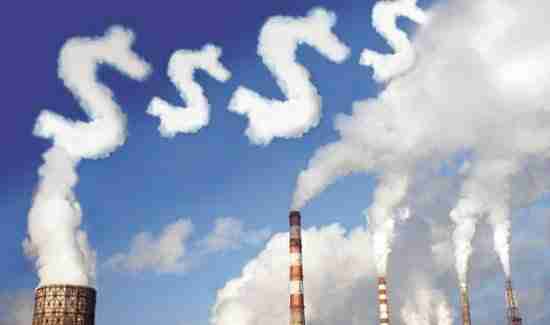
Climate change deniers and skeptics are right about one thing - anything we do that will actually have a positive impact on carbon pollution will cost people money. While they use the fear that energy and transportation costs will increase if the cost of carbon emissions is priced into the cost of fossil fuels to argue against action, this cost increase is a feature, not a bug. First, it acts as a disincentive to burn fossil fuels - people will reduce their consumption when the price goes up, that's simple economics. Second, it serves to more accurately price energy generation that results in carbon emissions. The cost of dealing with the pollution generated is part of the cost of using the products, and up until now the users of fossil fuels have been able to avoid paying any costs for this part of the energy generation process. It would be as if I decided I didn't want to pay the garbage man anymore and just started dumping my garbage in the public park downtown. Hey, somebody will pay to get rid of it - it just won't be me. I win!

And if fossil fuels become more expensive, alternative sources of energy generation become more attractive economically. The reason energy companies like coal and natural gas is because they are cheap - make them less so and that same profit-seeking motive will fall in behind the better economics of solar, wind and wave power.

But this is a steep hill to climb. People are for climate change mitigation in general, but all it takes to get them to vote against it is a campaign to frighten them about the costs. And supporters of climate change mitigation regulations do a terrible job of addressing these concerns. They run away from them, or they try to add tweaks to the rules that reduce the cost to consumers. The reason they do this is that, as mentioned above, these costs ARE real - the are a necessary outcome of pricing carbon externalities into fossil fuels prices.  One cap and trade proposal even includes using the income generated by emission coupons to offset price increases to consumers. That, my friends, would be stupid and pointless. If people don't reduce their consumption of fossil fuel energy, the caps will be impossible to sustain.

It's kind of weird. People understand that if they want something, they have to pay for it. So one must assume that when it comes to climate change, infrastructure, public transit and low-income housing people SAY they want it, but they don't actually want it enough to pay for it. This suggests that a better marketing campaign is in order - if you want people to buy something, you have to sell it to them based on value and return on investment.
...

Thursday, September 18, 2014

It's Criminal! The NFL and Me

...
Oh look. He's lying again...
It has not been a good couple of weeks for pro football. Football players have always been prone to violence - the combination of a lifetime of rewards for viciousness and brutality and the protection from consequences afforded to star athletes from the earliest part of their careers has seemingly made them significantly more likely to resort to violence than the rest of the population.  And that factor has reared it's head repeatedly recently, with horrific scenes of domestic violence and tales of brutal corporal punishment.

So this has all resulted in a couple of different conversations taking place simultaneously. The first is how the NFL and the teams should react to these cases, how they should formulate policy and how that policy should be carried out. The second is a more intimate question of how we, as consumers, should respond to these events.

The first question is hard at one level. It's an argument about at what point in the legal process should a player be considered for punishment. And that bumps up against a whole lot of questions about due process, employee rights, politics and optics. And oddly, the initial question seems to start and stop at whether the team should allow the player to play in the games. Personally, I'm not sure how a paid vacation that essentially punishes the team for the (alleged) actions of the player constitutes a punishment, but we'll accept the general consensus that it does. So as far as I'm concerned, if a player is charged and arraigned on felony charges that include any kind of violence, the teams should at a minimum suspend him without pay, and should have the option, depending on the egregiousness of the crime in question, to void his contract. Note that is after charges have been filed and the player has had a chance to enter a plea. An arrest can lead to a lot of different outcomes, but it very often leads to no charges being filed, and is therefore simply too early in the process to take punitive action.

The second question to me is an easier one. I like to watch football. Most of the players are not bad people. So if the question is whether I should give up doing something I enjoy in order to take some kind of consumer action against a league that's going to continue to play games whether I watch them or not, the answer is that would be pointless and ludicrous.

So no. I don't feel guilty, and I don't think I can influence the arc of commerce. But even beyond those, I don't understand why I should be punished for the excesses of a few criminals. I WANT to watch the games, and unless somebody can explain to me how NOT watching those games would make the world a better place, I think I'll just stay the somewhat rocky course.
...