Monday, September 30, 2013

Felina

...
Annnnnd - That's a Wrap
The premise, from the very beginning, was that Walt was going to die. His death, ultimately felt not only inevitable, but natural.  There was no other way for it to end for Walt.  The question that needed to be answered was how would Walt die - not so much in the mechanistic terms of the proximate cause of his demise, but rather what path he would take to his death, and what would he leave behind.  There was always a certain tension as you watched him build his empire and become the brutal, murderous Heisenberg, wondering whether he would live long enough to die from the cancer that riddled his body. But mainly, it was about how the man and the quest interacted in the process, and how a plan to leave his family with enough money to live after his death became a plunge into madness and brutality that left everyone around him dead or damaged.

It's interesting that such a dark series had such a 'happy' ending, at least in Breaking Bad terms.  There was no fixing the damage Walt had caused, or regaining the love of his family.  Hank was dead, his son and wife hated him, Jesse was gone, and Todd was running the meth business as only a good-natured psychopath could. But there were things Walt could do, a short term bucket list if you will, things that would settle matters and tie up loose ends for him.  The choices that remained for him were to act against the people who represented a threat to his family, the ones who had killed Hank, taken Jesse and brought about Walt's complete debasement.  THEY were the remains of Walt's to do list in which the last item was 'lay down and die'.

Terrorizing the Schwartzes into laundering the White family fortune was a perfect example of Walt's combination of brilliance and brutality.  In checking the first box on the bucket list, he corrupts them, making them in some way complicit in his crimes in a way they can never quite escape.  Walt knows that as time goes by his plan will become their plan, and accomplishing it will be a kind of success.

Item number two was that pesky ricin. It's been in play for years, and now it comes out.  A brief five minute meeting with Lydia in a coffee shop, followed a day later by a triumphant phone call to let her know that even though she's not dead yet, he had murdered her.  Brutal, as the final admission to Skyler: "I did it for me" was brutal honesty.

Then, in an almost cartoonish climax, the old machine gun in the trunk trick wiped out Jack, Todd and the Nazis.  But it had to be - Jack shot Hank in front of Walt, and Walt was never going to let that stand, no matter how weak and helpless he appeared to be in that cabin in New Hampshire.  But it was key to the actual denouement - the final confrontation with Jesse.  And when Walt implores Jesse to shoot him, and Jesse tosses him the gun saying "do it yourself", we are witnessing the true end of Breaking Bad.  Jesse walks out, free and something approximating whole, and it remains only for Walt to lay down next to the meth lab he built and die.
...

Sunday, September 15, 2013

This Week in Jihad

...
Busy week for Jihadis and those that love them.


Respect your enemy - this dude had courage
and commitment
For at least the eighth time, Alabama born rapping jihadi Omar Hammami has been declared dead.  As you might have heard (if you are so pathetic that your life includes paying attention to such things), he had a major falling out with the leader of the al-Shabab organization for which he has previously been a fairly effective field commander in Somalia, and they've been aggressively trying to kill him as part of a purge of “foreign fighters”.  In June he reported via his Twitter account that he had been “shot in the neck” but was, apparently, not dead and he went into hiding immediately afterward.


The FBI had him on its Most Wanted list, which seems somewhat silly as he was fighting in the seemingly endless Somali civil war and not really doing anything the FBI should care deeply about.  For that matter, it certainly seems as if al Shabab head Moktar Ali Zubeyr missed a significant funding opportunity if he simply killed Hammami and buried him in the desert, as has been reported.  The FBI was offering $5 million dollars for him - seems like that would have been a good trade-off for the organization.


At any rate, to whatever extent the world is better off rid of him, I will miss him for the entertainment value he brought to an otherwise mundane on-again off-again African bush war. And while they apparently neither supported nor understood his life’s work, his family misses him too. In his fathers words, "If he indeed died, he died fighting for his principles, whatever they are."


Fighting Jihad with AKs and VHS tapes
since 1988
This was also the week with another anniversary of the 9/11 attacks, so that means another audio only missive from the worlds favorite terrorist surgeon, Ayman al-Zawahiri.  Much of core al-Quaeda in the Pakistani hinterlands have been decimated by fighting in Afghanistan and American drone strikes, but Zawahiri just goes on, in sole command of the remaining organization now that his partner Osama bin-Laden has gone to his reward.  


While bin-Laden was fixated on very large, spectacular attacks, from the USS Cole bombing to the African Embassy attacks, culminating in the 9/11 hijackings and attacks on New York and Washington, Zawahiri seems to be more pragmatic, cognizant of the reduced operational and financial resources available after more than a decade of relentless attacks by the global counter-terror forces.  And sure enough, in his message commemorating 9/11 he called for small-scale “lone wolf” attacks within the United States.  His premise, essentially accurate, is that these sorts of attacks, car bombs and random shootings, would have a powerful negative impact on the American economy, making the US weaker as we dedicated more and more resources and stripped away ever more civil rights trying to prevent these kinds of attacks.


Indeed, in light of the Snowden NSA surveillance revelations, al-Quaeda terrorists have to acknowledge that their organizational options are significantly reduced as they must work without cell phones, email and web-based organizing and communication tools.  But ever since 9/11, I have been very surprised that organized Islamic terrorist groups haven’t adopted this kind of tactical doctrine against the United States.  There is no doubt that a steady drumbeat of two widely geographically diverse small-bore attacks a month, even with minimal loss of life, would create an outpouring of insanity in American society that would utterly transform the culture and the economy.  The main reason that Americans are so generally comfortable with waging war around the world is that those wars never happen in our cities and towns - they are always thousands of miles away.  You bring even a low level guerrilla conflict to US soil and things will get ugly and stupid very quickly.


The US must end these drone attacks
immediately. (Wink. Wink)
Meanwhile, in Pakistan, the spokesman for the Foreign Office, Aizaz Chaudhry announced that Pakistan will be taking the issue of US drone strikes to the UN.  I’m still quite sceptical.  It’s true that Nawaz Sharif based much of his campaign on resistance to American bombing of Pakistani territory, and it’s also true that Zardari has been willing to play a classic double game of publicly denouncing drone attacks while secretly authorizing and even encouraging them.  But it’s also true that if the Pakistani government and military leadership sees the aerial bombardment of their land as a violations of their sovereignty, they should be using their well developed air defense capability to at least try to prevent the foreign attacks.  As long as they refuse to do so, one can reasonably conclude that they are more interested in keeping the US funds flowing and paying lip service to political realities while permitting the US to bomb targets in the Tribal Areas.

So what does the UN complaint mean?  And what can the UNSC actually do when America holds a veto?  It’s worth recognizing that the drone bombings in Pakistan have very little, if anything to do with terrorism.  At least 90% of these attacks are about force protection in Afghanistan, killing and disrupting fighters that have safe havens in the Pakistani borderlands.  So Obama is unlikely to discontinue the bombing until the American presence in Afghanistan is reduced or ended.  But regardless of the involvement of the UN, the story has the same ending it always had.  If a nation is under aerial attack, and refuses to deploy its air defenses to resist that attack, it’s safe to assume that nation is complicit in those aerial attacks.  Everything else is just a political smokescreen.
...

Monday, September 2, 2013

American Offensive Power and the "Drive By Shooting"

...
This is no joke.  Repeat, this is no joke
Just a couple of random, unrelated thoughts about the potential counter-CW strike on Syria.  I've seen a large number of comments from people who, typical of Americans, don't know what it means to be under aerial bombardment - comments to the effect of "Meh. We throw a hundred and fifty cruise missiles at them and call it a day".  The fact is, yeah, this is exactly what we do. The deep disconnect is the misunderstanding of what that means, and what it accomplishes.

First, the problem with the mainstream, as opposed to the more professional discussion of an attack on the Ba'athist Syrian regime is that it casually conflates a response by the international community to the use of Chemical Weapons against a civilian population with an intervention in the Syrian civil war with the goal of producing a favored outcome.  What we're talking about here is an attack intended to deter the use of Sarin as a lethal crowd control solution.  Sarin is a brutally efficient counterinsurgency tool, that can clear entire neighborhoods without damaging them, and those neighborhoods can be repopulated in a matter of hours.

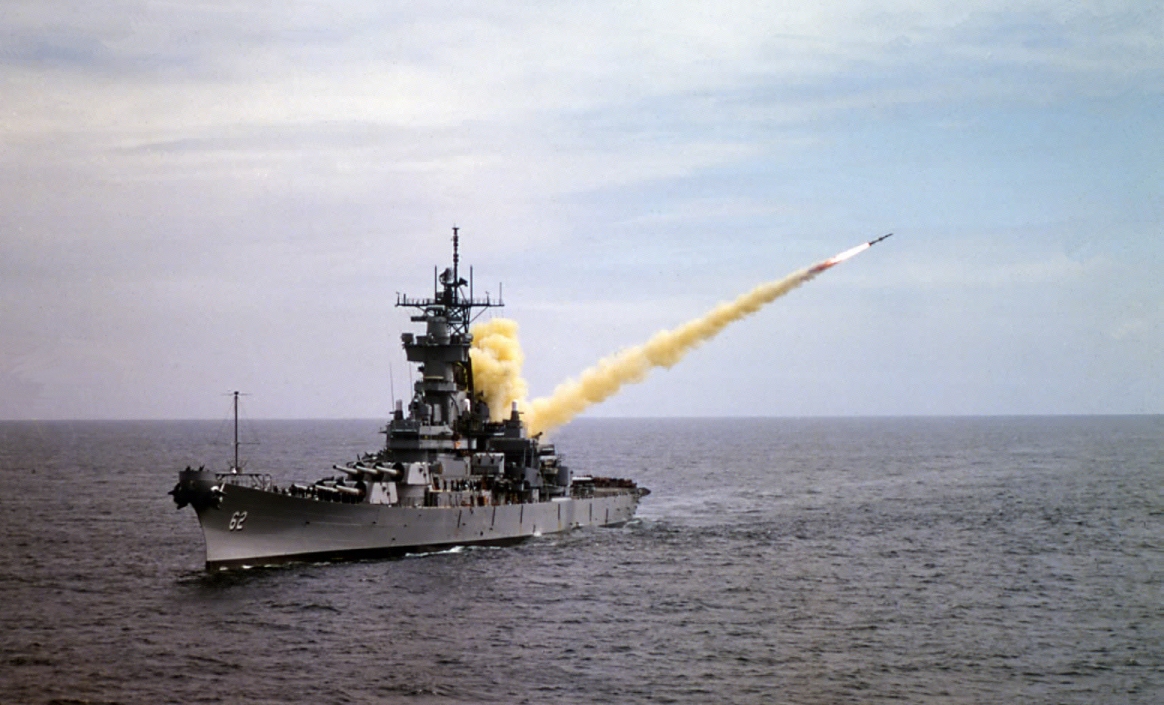
So why would a quick 48 hour 'drive by' attack by US naval forces in the Mediterranean serve to deter a desperate regime from clearing the suburbs of his Capital city with nerve gas?  The key is to understand the combination of factors that make cruise missiles effective.  They are essentially 1000 pound bombs, capable of leveling a large building, and they are pinpoint accurate, using a combination of GPS signalling and terrain maps to actively guide to a very precise predetermined impact point.  A hundred and fifty 1000 pound bombs, placed precisely on the right targets, can change the history of a nation.  So from that standpoint, it's important to understand that the attack being proposed is not a pinprick, nor is it some kind of symbolic statement - a great deal of damage can be done with an attack like this, damage to the most critical infrastructure that al-Assad is using to kill thousands of his people every month.

Regardless of how you feel about American involvement in the Syrian civil war, there are questions here that must be answered.  There is no doubt that there was a release of Sarin gas that killed well over a thousand civilians in the Damascus suburb of Ghouta, and you'd have to be pretty blind or dishonest to believe that release was the action of rebel forces.  So the real argument we're having here is 'what is the role of the international community in deterring the use of CW by government forces in internal conflicts"?  If the answer is that the world should not get involved in these matters, that government forces putting down rebellion by any means is nothing more than an internal problem, then you have to acknowledge the kind of world you're willing to live in.  Because, despite their unfortunate conflation with nuclear weapons, chemical toxins are easy to produce and are an ideal solution to a restive population - at least for a brutal dictator with no compunction for taking the lives of thousands of his citizens.

For me, I'd like to see the world respond violently to any CW release anywhere, any time, by anyone.  I don't think humans should be exterminated like bugs - and make no mistake, Sarin is just RAID for humans.  And without a strong reaction from the global community, I believe we're going to see more autocrats use nerve gas as an ultimate crowd control tool when they are confronted with democracy activist protests.  Just think about the massive overuse of tear gas in Turkey this summer and ask yourself, honestly, how far we are from just a little more toxicity to bring the 'terrorists' under control?

I guess in an ideal world we'd be having a discussion of our role in protecting civilians from their own government - a discussion we were not willing to have after Srebrenica, and again after Rwanda.  We found a way to do the right thing over Misrata in the Spring of 2011, but even then, the world wasn't willing to develop a framework for making determinations about when they can contribute to reduce the slaughter, and when a Western military solution has nothing to offer.  But the world can't figure out how to have conversations like that, so we address each new atrocity like it's something new, something we've never seen before.  And more often than not, we bungle it, and a whole lot of people die.  And we should recognize that if we could have prevented that, we own some responsibility for it.
...

Saturday, August 24, 2013

The Passing of a Master

...
Elmore and Raylan
At least we still have "Justified"
In the beginning, there was Travis McGee.  The classic creation of John D. MacDonald, he was my introduction to life or death battles over small stakes, local wars with tiny armies and life-changing outcomes, a world in which greed and violence were destructive on a smaller scale, and yet the stories could teach me so much about courage and honor and the things people on both sides are willing to do to get what they want.

And my love for MacDonald and his Knight in Rusty Armor eventually led me to Elmore Leonard.  Though his first Detroit crime book was City Primeval, the first Leonard novel I read was “Split Images”.  And my mind was absolutely blown.  Here was something different, weird and quirky and yet disturbingly recognizable, the actions of brutal, greedy men in their own little milieux, casually wrecking the lives of friends, neighbors and loved ones.  Here was people talking to one another in comfortable rhythms, speaking of the banal and the horrific in the same paragraph. The only thing close to it was “The Friends of Eddie Coyle”, but this wasn’t greedy small-time mafia thugs, this was smaller time and objectively crazier people, circling and jostling each other in small orbits.

That juxtaposition of life and death writ small, a world where a casual contact one day could lead to a bloody confrontation the next, where a man could decide to bet it all on a desperate grab for a big bag of cash, where threat and menace could be the clear subtext of a mundane conversation.  While I loved Split Images and immediately set out to gobble up the entire Leonard library, it turned out that the rest of his work was, in an odd sense, gentler than my first sip at the cup.  Split Images was a harsh, brutal story, punctuated by the classic Leonard wit, and occupied by the kind of off-center and even distinctly unbalanced characters that are simultaneously the most fun to create and the hardest to carry off.  I went back to the beginning, and I read “City Primeval”.

If you have never read it, stop what you’re doing right now and order it.  Because, remember, this was his first work outside the Western genre, and the climactic scene, in a kitchen with spoken and unspoken narrative around the refrigerator, a couple beers and a bottle opener seems banal, even friendly.  But it is a deadly confrontation, and the underlying reality is two men trying to position themselves to get the jump and shoot the other dead.  It is classic Elmore Leonard in every way, a kind of scene you see played out time and time again in his novels, his movies and in Justified, the television series he created with his quirky US Marshall Raylan Givens as the lead character, and a classicly twisted foil in Boyd Crowder, played by the endlessly mesmerising Walton Groggins.  The only thing I have ever read that comes even close to that climactic set-piece in City Primeval was a scene in a cantina in the incredible, though sadly out of print R. Lance Hill novel “The Evil That Men Do”.  I doubt if you can find it, but if you can you’ll be quite glad you did.

In 1976 Elmore Leonard introduced us to Frank Ryan, ex-con, professional armed robber and the author of the Ten Golden Rules for a successful career in armed robbery.  If there was any doubt remaining, that closed the deal for me.  Here was everything I wanted in a novel - primarily no freaking “good guys”, just bad guys to root for and bad guys to root against.  A protagonist who was a thief, whose life goal was to be a successful thief and who was willing to develop and enforce a set of discipline and rules around that goal.  A thoughtful and careful thief, sure, but one who willingly chose his life without regret.

Elmore Leonard went on to garner great fame and fortune, unsurprisingly in the movies, where his dialog-heavy stories lent themselves so ideally to that kind of format.  From Travolta in “Get Shorty” to Tarantino’s “Jackie Brown” to Clooney and Lopez in “Out of Sight” to even Russell Crowe and Christian Bale in “3:10 to Yuma”, a 1953 Elmore Leonard short story, his successes at the box office dwarf his reputation as an author.  But if you want to see inside the mind - and the heart - of Elmore Leonard, go back to those early crime novels, City Primeval, Split Images, Swag, and Unknown Man #89.  The settings were richly detailed, the City an actual character in the books, the characters deeply human and nuanced, and the stories were kinetic and plausible.

A few weeks ago, Elmore Leonard had a stroke, and on Tuesday he died in his home outside of Detroit at the age of 89.  He was a master of the American novel - not seeking to produce some kind of classic literary prose but rather the novel in it’s purest form - the novel as entertainment.  He wrote stories people wanted to read, set in places and occupied by characters that were at once familiar and exotic.  His mastery of the American dialect - North, South, Black or White - lent a powerful realism to his dialog.  You can see his influence in people from Quentin Tarantino to Aaron Sorkin, and as he famously said in his 10 Rules of Writing, “if it sounds like “writing”, rewrite it”.

His loss is a profound one for the millions he has entertained for decades, a unique American literary voice that might be equalled, but can never be replaced.  Thank you, Mr. Leonard, for all the hours of joy you gave me, for the insight into what the written word can be, and most of all, the understanding that big things happen in small places, and the magnitude of the event is measured locally, by the people it impacts.
...

Saturday, August 17, 2013

Christie, Barrett and the Limited Value of Symbolism in Solving Problems

...
Yes, Congresswoman, that is one
helluva great big gun
Everyone knows, and essentially agrees, that the political environment for legally reducing access to and use of firearms in America today is terrible.  There is that horrifically destructive constitutional guarantee, which empowers the toxic political forces on the right to depict any common-sense attempt to regulate the availability of deadly weapons as a challenge to the very foundational values of the United States.  In light of the political difficulty of passing ANY legislation that limits the availability of firearms in any way, the people who refuse to accept that the loss of so many lives is a necessary or acceptable cost to assure the integrity of the constitution and the freedom of the American people to legally own firearms have been forced to look for small-bore legislative victories. Some of these have happened at the state level, in states where legislators are not so deeply in thrall to the worst impulses of the right-wing madmen.  But those must be limited in scope, lest they draw a legal challenge and are struck down as violations of the second amendment.

So in spite of the tragic and infuriating reality that virtually ALL of the thousands of gun murders, suicides, assaults, robberies and accidents happen with common, garden variety handguns, people seeking to reduce gun violence in the US are limited to trying to find cases at the margins that can generate enough support to pass in Congress.  And when you realize that even comprehensive background checks couldn't garner sufficient support to become law, you begin to understand how narrow that window truly is.  Sadly, however, this condition results in some pointless, silly, even farcical legislation that, in the end, makes smart, caring people who are trying to reduce the carnage look small, petty and uninformed, while doing NOTHING at all to stop the violence.

First there were "Cop Killer Bullets".  Of course - who could possibly be in favor of cop killer bullets? So there was strong bi-partisan support for a ban, which was duly passed by Congress.  Only later did it slowly become clear that regular old non-cop-killer bullets were just as deadly, and the threat from armor piercing rounds was mostly hype.  Later came the calls to ban Assault Weapons.  There was a national ban which expired in 2004, and various states, notably California, have bans on various types of weapons.  Again, the result of these laws was to reinforce the realization that these types of weapons are not a significant factor in our gun violence problem - they are large, expensive, impossible to conceal and difficult to replace - and banning them did nothing to reduce gun violence.  What's worse, even the bans were impossible to implement effectively, because no matter how the laws sought to define the term "assault weapon" it was easy for the manufacturers to redesign their weapons to avoid running afoul of the law.  At the end of the day, all semi-automatic rifles that used a removable magazine and were chambered in 5.56x45 or 7.62x39 worked the same, and the features that were being banned were entirely cosmetic.

Which brings us to New Jersey today.  The State Legislature passed a bill banning rifles chambered in .50 BMG.  Why?  That's unclear.  It's true that this is a powerful, devastating weapon, with a range of well over 2000 meters, a weapon that is classified by the US Army as an "anti-materiel" weapon - that is, one to be used against vehicles and structures more than against people. But no one can remember one ever being used in a crime.  The rifle costs ten thousand dollars or more and is huge, five feet long and weighing over 30 pounds.  Rounds of .50 BMG ammunition cost over five dollars each.  Just not the kind of weapon you'll see used in most murders or gas station stick-ups.  Plus, for all the vaunted power of the .50 BMG, there are MANY other calibers in the same class.  .416 Barrett, .460 Weatherby, .300 Winchester Magnum and the round rapidly replacing .50 BMG on the battlefield, .338 Lapua.  So the law was pointless, accomplished nothing, affected few and was nothing but a gift to Governor Christie, who has been denounced as insufficiently nihilistic by tea party types.

Today Governor Christie vetoed the ban on .50 BMG rifles, gaining back some credibility with the far right without any cost.  There will be no grieving families on the Statehouse steps tearfully recounting how their child was killed with a fifty caliber rifle.  There will be no fewer gun victims, but there will be no more either.  Until the people who want to reduce gun violence begin to adopt realistic priorities and tactics, there will be no change in the status quo - and more children will die tonight.
...

Saturday, August 10, 2013

Bernie Fisher - Choices

...
They look pretty happy to be there...
When we think about heroism in combat, we usually think about the legends of the genre - from Alvin York to John Basilone to Audie Murphy. These were the men who stood, in the sustained roar and gore of battle, under intense fire, and they held the line.  We honor their courage, their commitment and their willingness to do what it took to do their job.  It is also part of the lore that for Americans, our greatest war heroes were also very deadly, killing dozens or even hundreds of enemy soldiers in a brief few hours of fire and madness.

But we often overlook the courage that some men demonstrate by the choices they make.  In many of these cases, there was no choice at all - sure, Audie Murphy climbed up on a burning tank destroyer, but without the gun on that vehicle he'd have simply been another GI killed in action on the German border that bloody winter of 1945.  And sure, Randy Shughart and Gary Gordon asked, no, demanded permission to insert at the 'Blackhawk Down' crash site in Mogadishu in '93.  But even so, some choices demand more recognition, more respect, more AWE than others.  It is in that sense that I have always held a special honor for Bernie Fisher.

In the spring of 1966, the American troop buildup in South Vietnam was well underway, and the disastrous Tet offensive was still two years in the future.  Major Fisher was assigned to the 1st Air Commando Squadron flying A1 Skyraiders out of Pleiku.  The rugged terrain along the Cambodian/Laotian border was contested territory, and the strategic center of it all was the A Shau Valley.  The valley was defended by a US Army Special Forces (Green Beret) A Team and about 300 indigenous forces.  On the night of March 8th, they were attacked by 4 Battalions (about 2000 troops) of NVA soldiers.

Even in 1966, the A1 was an anachronism.  Perhaps the pinnacle of WWII era piston-engine technology, it was a huge single engine attack plane with a payload greater than the B-17.  It was pressed into service in Vietnam because of it's tremendous bomb load and ridiculous loiter time. The A1 could stay aloft, fully loaded, for over six hours.  It flew slow enough to identify and target specific units on the ground, making it much better in the CAS (Close Air Support) role than the "Fast Movers" from the Navy and Air Force.  The pilots who flew the A1 nicknamed it the 'Spad' because it was just so old compared to the modern jets.  While the Skyraider became famous for it's role as 'Sandy' in CSAR operations throughout the theatre, Air Force veterans who wanted combat hours in the mid to late sixties had to be willing to transition back to piston engines, and few took to that transition better than Bernie Fisher.

On the Morning of March 10th, the camp was falling.  The weather was terrible, preventing reinforcements from getting to the scene, and ammunition was low while casualties mounted.  At dawn the NVA assault force broke through the East wall, and after hours of bloody hand-to-hand combat the defenders pulled back to a defensive perimeter on the North wall.  They called in air strikes on their own camp to keep it from being completely overrun.  These strikes were delivered by a six-ship flight of Spads that included Bernie Fisher and his wingman "Jump" Myers.  Fisher and the Air Commandos had been over the camp the day before, and for his actions on the 9th he would be awarded the Silver Star.  But this was a new day, filled with new possibilities - almost all of them bad.

It was a dismal, misty, rainy day in the A Shau valley, and the ceiling was less than 800 feet.  The Spads were delivering their ordnance in passes so low that the NVA gunners were actually firing down at them.  Almost inevitably, one of them got Myers.  Too low to jump out, and even if he could somehow bail out and survive, he would find himself on the ground surrounded by thousands of North Vietnamese infantryman.  When POW is the BEST possible outcome you can imagine, you switch to Plan B.  That's what Jump Myers did.  He made a desperate, wheels-up belly landing on the airstrip right outside the camp's perimeter.

Remote airstrips like the one at the A Shau Camp were set up quickly using "PSP", perforated steel plates that locked together to form a strong, smooth runway surface.  This one, however, had been in the midst of a major battle for days, and was pockmarked with shell craters and littered with debris, notably from a resupply plane that had been blown up on the strip a few days earlier, but also, now, with pieces and chunks of Jump Myers' crash-landing Skyraider.  The big fighter skidded to a halt, smoking, and Major Myers jumped out and ran toward the camp.  He was immediately targeted by the NVA soldiers, so he took cover behind a berm at the edge of the runway.  Behind him was the camp, fighting desperately to avoid being overrun.  Two hundred yards across the runway was the North Vietnamese Army.

A few hundred feet above, his fellow airman watched this all play out.  Fisher set up his top cover, keeping the remaining A1s circling tightly overhead, making gun runs to keep the NVA at bay.  The pilots were quickly informed that the rescue helos were a half hour out.  The problem with that was that Myers wasn't likely to survive another ten minutes in his situation.  This was the moment when choices had to be made.

The pilots could never be faulted for doing their best to protect their downed compatriot, making gun passes until they ran out of ammunition and then continuing to make low passes to try to buy that precious thirty minutes.  But courage, and love, and loyalty and adrenaline and commitment and who knows what other ingredients creates a witches brew that can produce acts of unbelievable valor.  Fisher told the other Spad Drivers he was going to land on the airstrip and pick up Myers.  The hardest choice imaginable, and he made it almost without thought.

By that time there were fresh warplanes arriving on the scene, and the local air controller kept them coming in a continuous stream, pounding the far side of the airstrip with bombs, guns and even napalm, while Fisher circled over the camp, turned up wind, and lined up for the hardest landing of his flying career.  But the wind was blowing smoke from the buring camp and the napalm across the airstrip, and by the time he had a clear view he was halfway down the runway.  Fisher pushed on power, and S-Turned at the end of the valley, coming back the other way to set up his landing.  At the threshhold he cut his throttle and dropped the big plane onto the battered runway.  Enemy small arms fire started hitting the aircraft immediately, as he delicately worked the brakes to steer around the worst of the holes and pieces of metal.  When he managed to get the Skyraider stopped - well past the end of the runway - he hit the throttle and stood on the left rudder, spinning the plane around and taxied almost the entire length of the airstrip - under heavy fire - to where Myers was crouched.  The Skyraider version the Air Commandos flew was the A1E, which had two seats side by side rather than the A1H "Sandy" single-seat version.  Fisher grabbed Myers by the seat of his flightsuit and dragged him into the cockpit head first.  They continued to take ground fire until they disappeared into the clouds.

Even at that very moment, after three days of fire and blood, the A Shau Camp was falling.  The defenders had pulled back to a single bunker and fought for their lives, but the camp was overrun by 11am and the Green Berets called for evacuation.  The evacuation was hard, ugly and chaotic, with two HH-43 Helos lost and more American airman dead and wounded.  By mid-afternoon, the camp was abandoned and the NVA had won, although, typically of modern warfare, at horrific cost of almost a thousand casualties.

How do you explain what Bernie Fisher did that morning in the Central Highlands?  How do you rationalize a decision to put everything you will ever be on the line, not to kill the enemy, not to 'win', however you define that, but just to rescue one man you care so deeply about there are not words to speak it?  How do you know when the risk is too high, when the effort is pointless, or when the choice is really no choice at all?  Heroism, ultimately, isn't about fighting, or about winning.  It's about making the choice to do something crazy, maybe even stupid, to stand between your friends and their certain death.  THAT'S what Audie Murphy did, that's what Gordon and Shughart did in Mogadishu, and above all, that's what Bernie Fisher did that dark grey day in the A Shau Valley.
...

Tuesday, August 6, 2013

Real Gunfighters - Clyde Barrow & the BAR

...
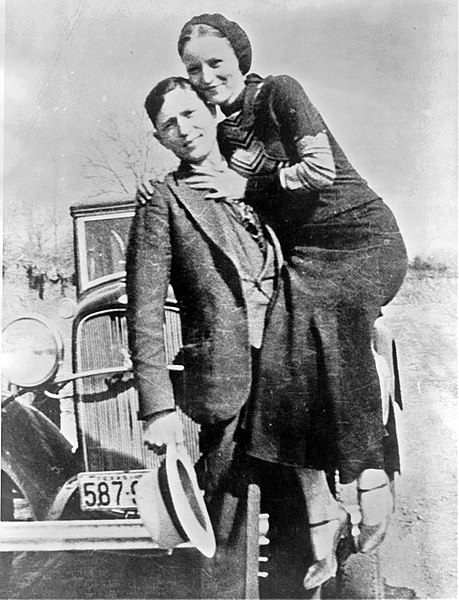
Coulda been me - just that close
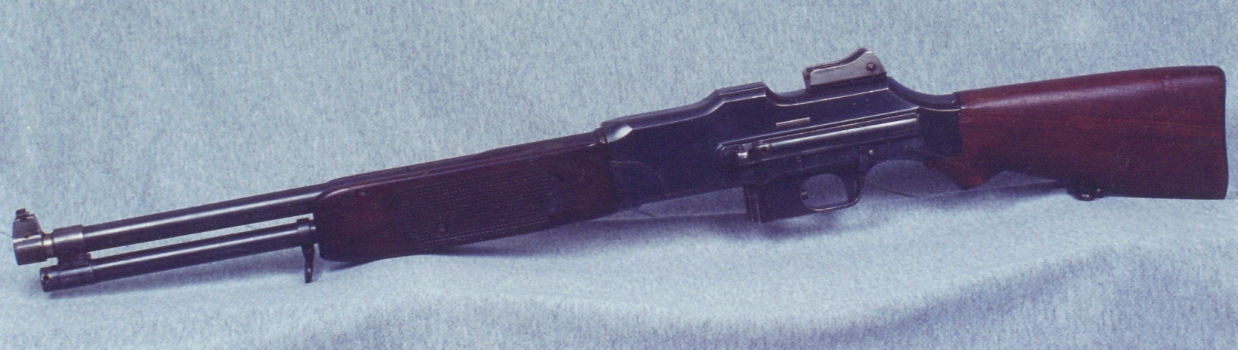
I wanted to write a post about the Browning Automatic Rifle.  The first American Squad Automatic Weapon, designed by John Moses Browning, the patron saint of firearms with a hundred year lifespan, the BAR was a man-portable machine gun that could be carried and fired by a single infantryman.  It fired a ferociously powerful .30-06 round and was more than sufficient for providing fire support for a small unit maneuvering to close with the enemy.

But here's the thing - for all it's history, the BAR is inextricably tied up with one of the greatest and most notorious gunfighters in American history, Clyde Barrow.  You can't paint Clyde with the same 'bloodthirsty thug' or 'mindless criminal' label that so many of his peers earned in spades.  Where Dillinger wasn't a fighter at all, and Nelson and Floyd used brutality and savagery above weapons and tactics, Clyde Barrow was something apart.  He fought to maintain his freedom, using his weapons almost exclusively against armed opponents.  Now it's true that he was a "bad guy" and the lawmen he shot it out with time and time again were nominally the "good guys", but those distinctions could get a little fuzzy in the depression and dustbowl era Midwest.

The BAR was a unique kind of hybrid, a full power .30 caliber rifle that fired full automatic, or maybe a limited capacity machine gun that, instead of being belt fed, fired full power rounds from a 20 round magazine.  However you looked at it philosophically, it was simply the most devastating weapon that could be fielded and operated by a single individual at the time. In combat it was impossible to counter, and in America, in battles with the law enforcement agents of the day, it was the closest thing you can imagine to a nuclear weapon.  It gave Clyde Barrow an overwhelming firepower advantage no matter how many cops he was facing.  And make no mistake, Clyde fought cops - he wasn't one to shoot civilians or seek bloodshed - but he wasn't going to be taken without a fight, and in those few months in '33 and '34, that became clear to all, even without Bonnie's poetry to drive it home.


The thing is, Clyde put more thought into his weapons and tactics than his peers did, and more than most of his opposition.  The fad was the Tommy Gun, and sure, you could do worse, but Clyde knew something that other gangsters and many cops either didn't grasp or managed to overlook.  The thing about killing is that it's not about guns, but rather about bullets.  The legendary Thompson Submachine Gun, for all its cachet, fired a pistol round, the .45 ACP.  And Clyde understood at his core that the only thing pistols were good for was fighting your way to your rifle.  You might look cool with a Thompson, but you can shoot your way out of trouble with a BAR.

But Clyde didn't stop there.  He created the 'Whippet Gun', so called because you could just "whip it out" when nobody knew you had it.  He took a BAR, cut down the stock, sawed off the barrel to about sixteen inches, and screwed a leather sling to the back of the stock.  The idea was you could hang it over your shoulder under a jacket, barrel down along your side.  And at the first sign of trouble you could swing it up and send 20 rounds of 7.62×63mm full-power rounds downrange in about three seconds.

Clyde's Famous Whippet Gun
The BAR was both an important step in the evolution of automatic weapons and a touchstone of American history.  You can't watch the first fifteen minutes of "Saving Private Ryan" without being confronted by it's incredible combination of portability, usability and devastating firepower. But for me, it's a smaller, more intimate part of our collective history and guilt.  The weapon that defined an outlaw who took his profession seriously enough to understand that guns aren't for looking at, they're for winning fights, and Clyde won a helluva lot more fights than he lost.  It's interesting to note that when Frank Hamer's posse finally found themselves face to face with the notorious gunfighter in Bienville Parish Louisiana in late May of 1934, they used their own custom BARs in .35 Remington, firing more than 120 rounds from ambush, hitting the young couple with more than fifty rounds and killing them instantly.

There are lessons to be learned here, one large, and one small.  The large lesson is that when they come to take your life, it is a fight, and you don't have to concede.  You just don't have to quit fighting, ever, and sometimes things work out.  The smaller lesson is that it pays to be practical, to think beyond the fads of the day, to work to understand what works and what doesn't, and just because the conventional wisdom is pointing one way, start at the other end, think about what it will take to accomplish your goals, and equip yourself accordingly.
...